
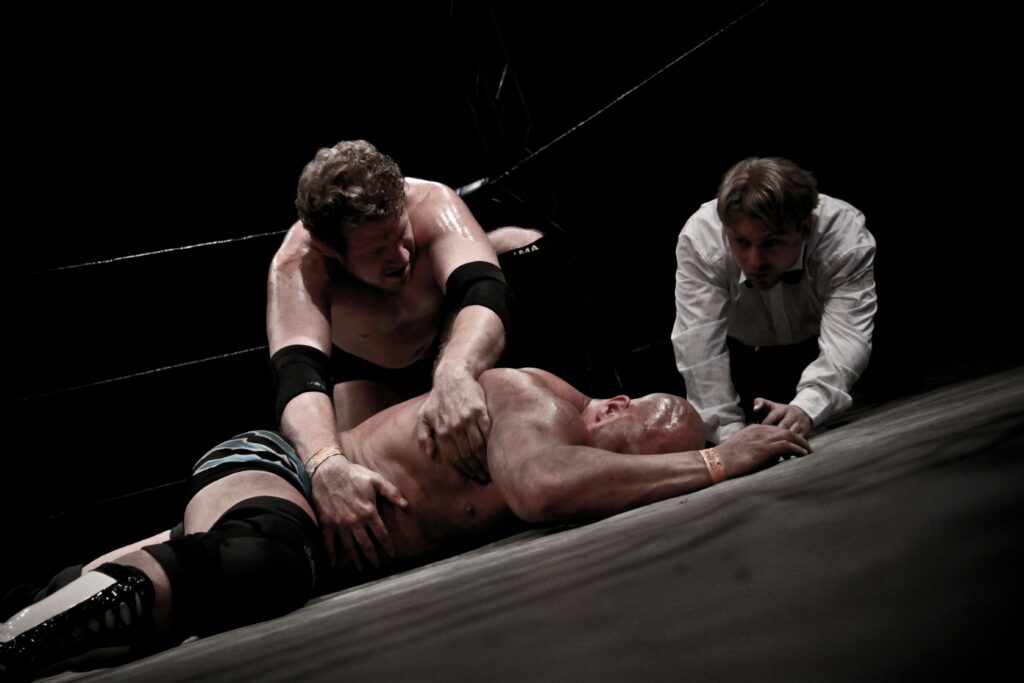
The South West of England has never needed to copy anyone else’s wrestling culture to matter. The scene here has always moved to its own rhythm, community venues, loyal returning crowds, practical promoters, and wrestlers who learn very quickly that winning over the room matters more than winning a belt.
That’s where the real identity of South West wrestling has been built. Not in massive arenas or television studios, but in local halls where the audience is right there with you. This piece looks at how that identity developed, why it works, and where the scene could go next.
Why the South West matters in British wrestling
When people talk about the history of British wrestling, they usually focus on TV eras, famous venues, or big-name stars. But the real health of the industry doesn’t live there. It lives in regional scenes that keep wrestling happening week after week.
The South West is one of those scenes.
What makes it special isn’t a single promotion or a breakout star. It’s the combination of geography, venue culture, and audience behaviour. Shows here often take place in town halls, leisure centres, social clubs, and community spaces where the crowd is right on top of the action.
Those environments demand something different from wrestlers. There’s nowhere to hide. You have to connect with the audience quickly, adapt to the room, and carry a story through genuine crowd reaction rather than production tricks.
The venue model: intimacy as an advantage
In bigger cities, wrestling is often about scale, bigger lights, bigger gates, bigger online moments.
In the South West, the real strength is intimacy. Fans are close enough to feel every moment of a match. They remember characters from show to show. They notice details. And that creates accountability. For wrestlers, these rooms are a brilliant proving ground. If your timing is off, everyone can see it. If your character work hits, the entire room feels it. And for promoters, these venues allow sustainable shows if expectations are realistic and local promotion is consistent.
It’s less about one huge event and more about building trust with the audience over time.

Promotion identity over brand noise
One of the strengths of South West wrestling has always been clarity of identity. Fans respond when a promotion knows what it is. What kind of matches it puts on. What tone it aims for. Whether it leans family-friendly, hard-hitting, or a mix of both. And whether championship stories feel earned.
That kind of identity building isn’t always flashy, but it’s what turns a casual attendee into a regular. It also makes a difference when it comes to media coverage. If a promotion can explain what it is in one clear sentence, it’s much easier for local press and wrestling outlets to talk about it.
Talent pathways: the proving ground
The South West has long worked as a proving ground for wrestlers. Working regional shows teaches practical skills that matter everywhere: pacing matches for mixed crowds, adapting to different venues, and maintaining story continuity while still delivering big moments. Wrestlers who develop in these environments tend to become resilient performers. If you can win over a tough local crowd in a packed community hall, you’re usually well prepared for bigger stages later.
Results culture vs announcement culture
Modern wrestling coverage often splits into two things: announcements and results.
Announcements create anticipation…match cards, returning stars, ticket launches, upcoming shows.
Results create credibility…who won, who retained, and what actually changed in the story.
The healthiest scenes balance both.
If everything is announcements with no follow-up, the product can feel weightless. If it’s only results with no forward momentum, interest stalls. The best coverage connects the two: what happened, and why it matters for the next show.
The fan relationship
In regional wrestling scenes like the South West, fan loyalty is infrastructure. Regular attendees are what keep promotions viable. They bring friends, share posters, talk about events, and keep the word-of-mouth alive between shows.
Because of that, communication matters. Clear event information, transparent ticket details, and honest updates when cards change all build trust and in local scenes, trust compounds. If fans know a promotion consistently delivers, they’ll forgive the occasional setback.
What could strengthen the next phase
The good news is the core strengths of South West wrestling already exist. What could improve now is the information layer around it.
A few changes would make a real difference:
- Clearer event pages with proper timestamps and ticket links
- Structured directories for promotions and wrestlers
- Consistent post-show results reporting
- Shared regional calendars to reduce event clashes
None of these change what makes the scene special, they just make it easier for fans and media to follow it.
A style worth preserving
There’s always a temptation in modern wrestling to imitate whatever looks biggest online but the strength of the South West scene has always been the opposite approach: lean into what already works. Close rooms. Loyal audiences. Honest storytelling. Promotions that grow through consistency rather than hype.
With stronger documentation and clearer storytelling between shows, the region doesn’t just stay active, it becomes easier for new fans to discover and for the wider wrestling world to respect.
British wrestling has never been one single thing. It’s a collection of regional scenes, each with its own character. The South West’s version is built on community venues, adaptable performers, and audiences who genuinely care about what happens in the ring. It might not always be the loudest part of the national conversation, but it’s one of the most durable and durability is what keeps a wrestling scene alive.
Sources / reference points:
swwrestling.co.uk
reachwrestling.com/events
csfwrestling.co.uk
Image license references
- Professional wrestling ring setup , https://commons.wikimedia.org/wiki/File:Professional_wrestling_ring_setup.jpg (CC BY-SA 4.0)